
Teach AI Once. Let It Execute The Workflow Forever.
Conxa records a cross-system process the way your team already runs it, then hands it to Claude and other AI agents as a skill they can run reliably — on software nobody has to modify, on your own machines, and it keeps working after the screens change.
- Prove it on one machine
- Run it across your team
- Ship it to your own customers
- White-label it
Add Employee
From a sentence to a finished task.
Watch a real run: a plain-language request, the right skill, and the software doing the work.
The work that crosses five systems is the work nobody automated.
Too small to fund an integration. Too important to get wrong. Too manual to scale. Your team knows the way through it by heart — an AI agent opening those same screens cold, on every single run, gets lost and costs more than the work is worth.
Your team, on your software
- Reads the screen and knows what every button means
- Knows the next step without thinking about it
- Recovers instantly when something looks different
An AI agent, starting cold
- Sees the screen for the first time, every time
- Guesses its way through menus and forms
- One layout change and the whole task falls apart
The fix isn't smarter guessing. It's handing AI the route your team already knows.
Each skill already knows what to do, where to look, and how to check its own work. Your AI only has to decide when to use it.
Four steps. No code.
From one human demonstration to a capability your AI can run on demand.
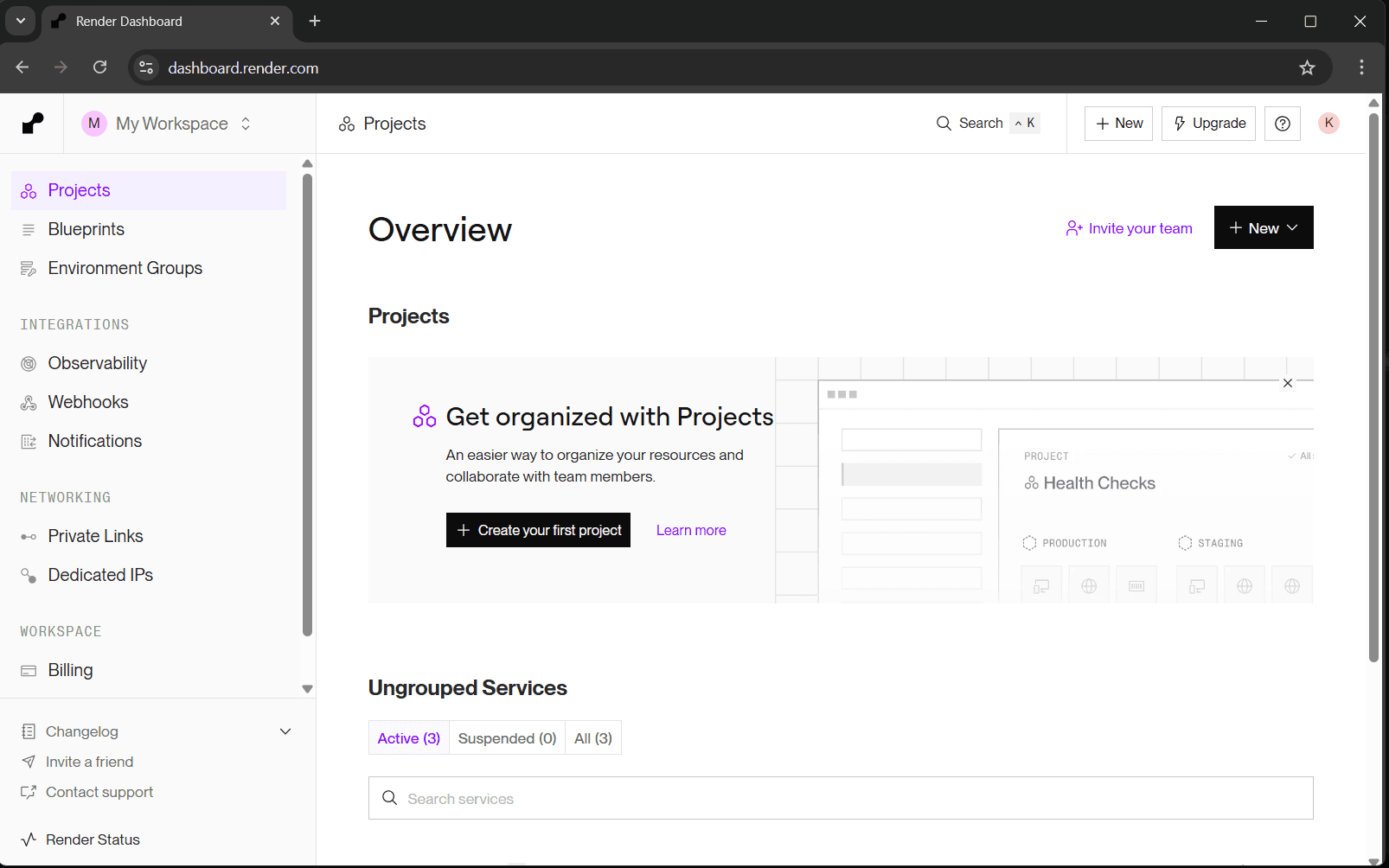
Show it once
A person does the job in a real browser — clicking, typing, navigating like any workday. Conxa records the whole run.
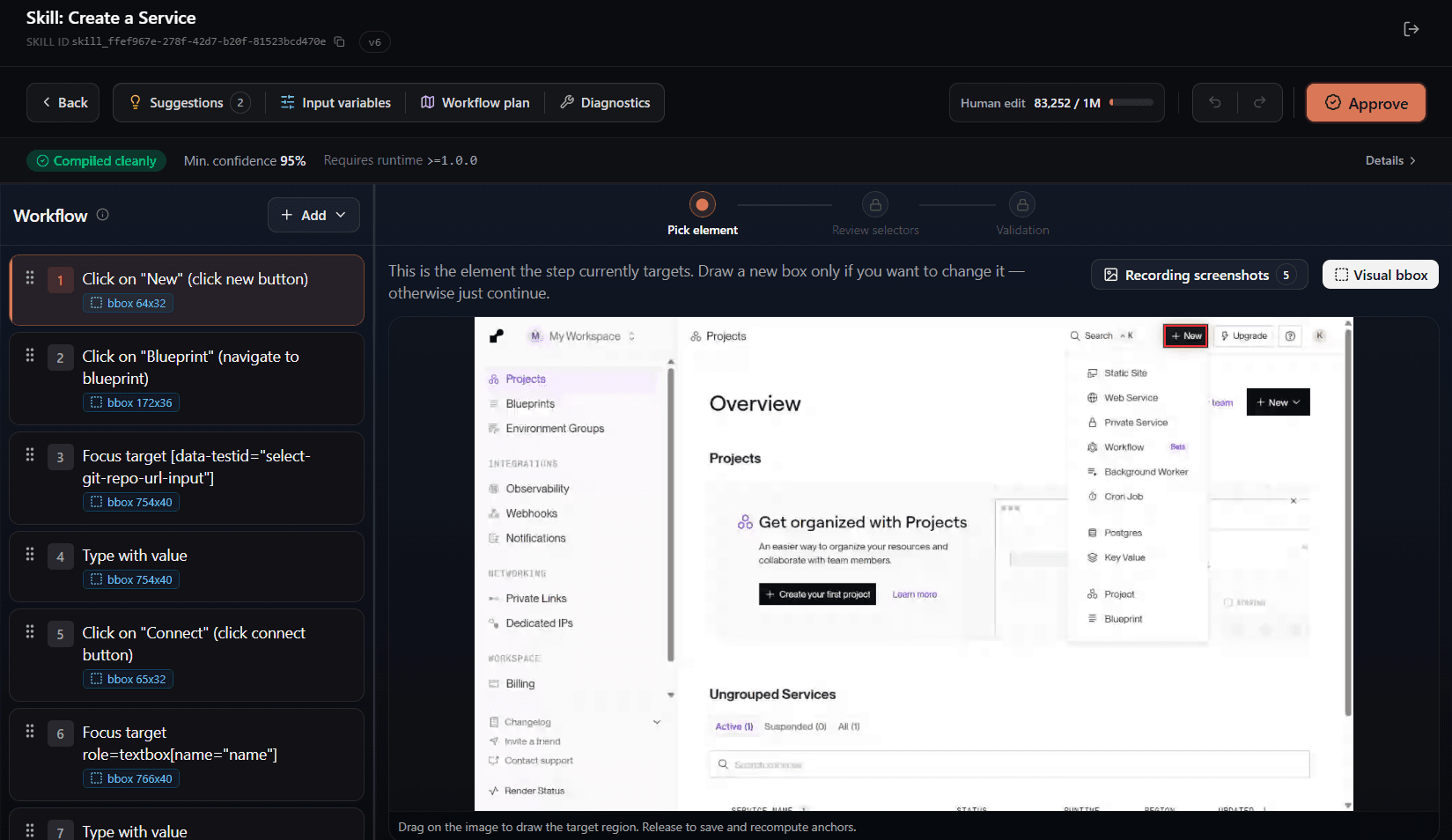
Conxa learns what matters
Not just where you clicked — what each step means. The button's name, its role on the page, where it sits, how it looks. If one of those changes later, the others still find it.
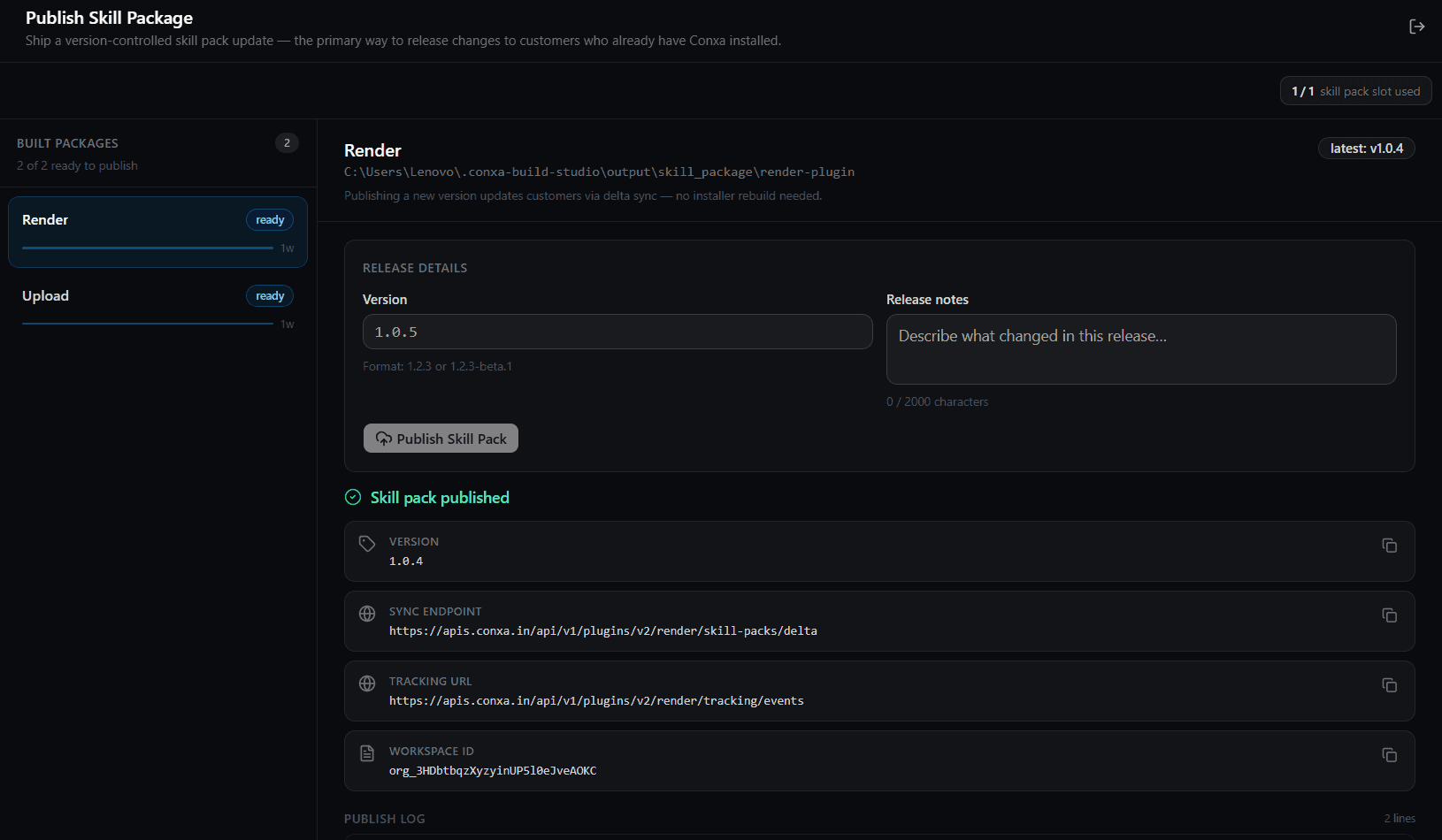
It becomes a skill
The workflow is packaged into a versioned skill — a capability you publish once and your customers or teams install anywhere.
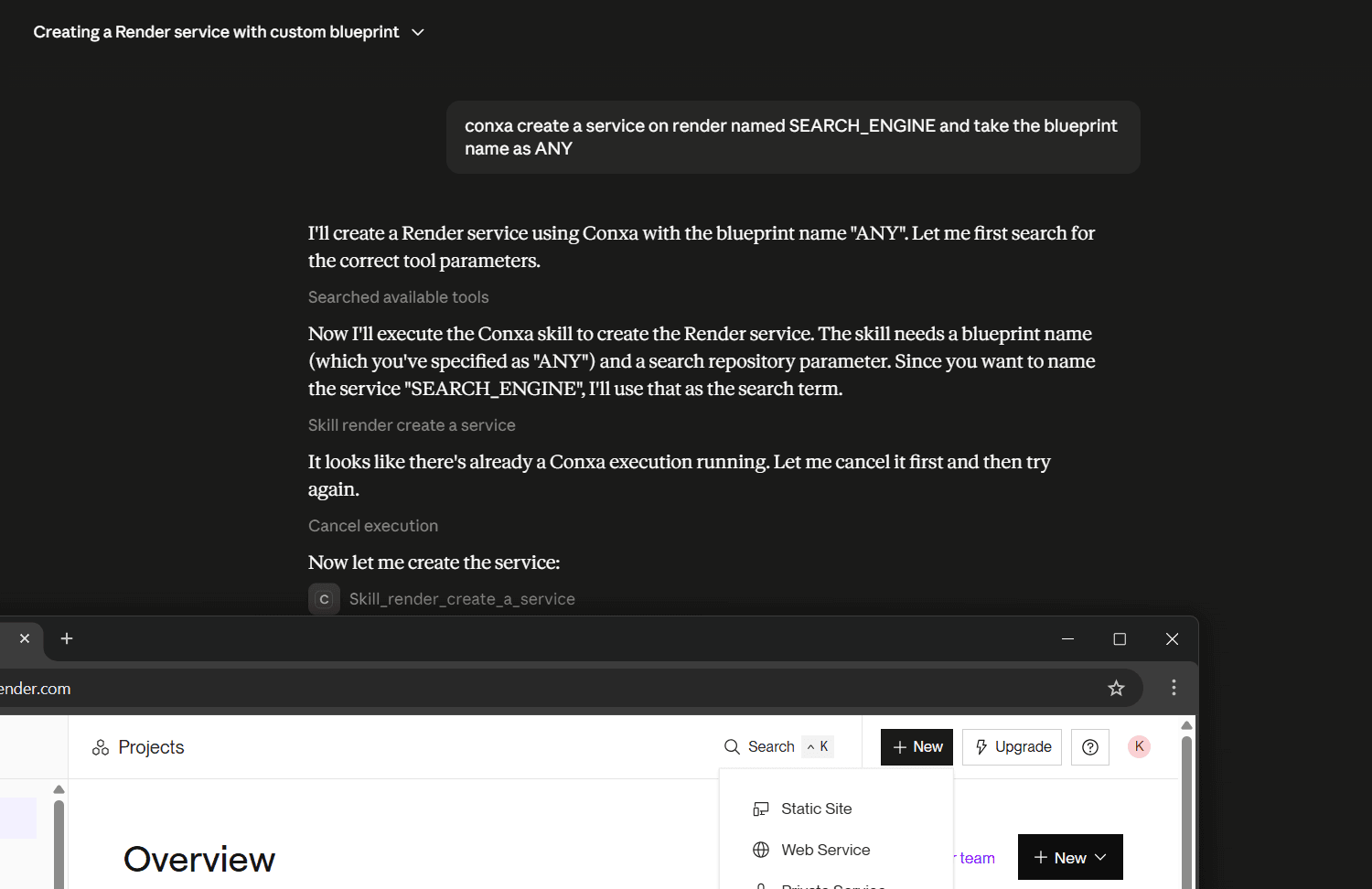
Your AI runs it
Ask in plain language. Claude runs the skill on your machine, step by step, checking its work as it goes. When a screen changes, Conxa finds its way — usually with no AI cost at all. The rare hard case gets flagged for a quick assisted fix.
Business processes, not single-app tasks.
A real process crosses systems nobody fully owns. If a person can carry it between screens, Conxa can learn it — no API required, for any system in the chain.
Customer onboarding
Sales ops · Customer success · CRM → ERP → email → internal tools
Show it once
Provisioning an account, configuring settings, triggering the welcome sequence — across four logins
AI handles it from then on
AI runs the whole process as one skill, every system updated in step
Claims intake
Insurance operations · Portal → policy system → finance → notification
Show it once
Carrying a claim by hand between systems that were never built to talk to each other
AI handles it from then on
AI moves the claim through every stage without a person relaying it
Vendor onboarding
Procurement · Shared services · Procurement → compliance → ERP → payments
Show it once
The exact process a services firm gets paid to implement for its clients
AI handles it from then on
AI runs it as a skill instead of a project, for every client whose stack looks the same
Invoice processing
Finance · Accounts payable · Document intake → extraction → accounting → approval
Show it once
Uploading a vendor invoice, coding it correctly, routing it for sign-off
AI handles it from then on
AI handles the routine entry runs, the same way, every time
HR onboarding
People operations · IT · HR platform → access/identity → payroll → compliance
Show it once
Setting up a new hire across every system that needs to know they exist
AI handles it from then on
AI takes each new hire through the same proven steps
Operational reporting
Operations leadership · Operational tools → dashboard/document → distribution
Show it once
Pulling the week’s figures out of the systems that hold them, not the one with an API
AI handles it from then on
AI assembles and circulates the same report on the same schedule
What one of these is worth, in your numbers
Payback here is arithmetic, not a promise. Your dashboard multiplies the minutes a run actually takes — measured from real executions — by how often you run it and what the person doing it costs today. Measured figures and your own assumptions stay labelled separately, so nobody has to take the total on faith.
minutes per run × runs per month × loaded cost per person
If your team does it every week in a browser, it's a candidate. Record it once and see.
Automation you don't have to babysit.
Every other way of connecting AI to software fails the same test: what happens six months in, after the interface has been redesigned twice?
One run, step by step
Vendor onboarding across four systems. The certificate upload had moved since it was recorded — the step found it again on its own and the run never stopped.
- Open the supplier portalSucceeded
1 of 1 checks passed
- Create the vendor recordSucceeded
2 of 2 checks passed
- Set the payment termsSucceeded
1 of 1 checks passed
- Attach the compliance certificateSelf-healedTier A
2 of 2 checks passed
- Post the record to the ERPSucceeded
3 of 3 checks passed
- Check the ERP record matchesSucceeded
4 of 4 checks passed
- Queue the first paymentSucceeded
2 of 2 checks passed
- Notify the requesterSucceeded
1 of 1 checks passed
What the healing costs you
Tier A is deterministic and runs locally — no model, no tokens, no bill. Only Tier B reaches for one.
What it costs as volume grows
You pay to compile a process once. Running it is local, and unmetered on every tier — including the free one.
The run and the figures above are illustrative — they show how the recovery ladder behaves, not measured customer results. Your own numbers appear in the dashboard once your skills start running.
One demonstration replaces the script that breaks, the integration that never ships, and the agent that guesses. Here is what each of those actually costs you.
What you would use instead, and where each one stops.
Conxa sits at an intersection nobody else occupies: fast to value, maintainable by your own team, self-healing, predictable, and shippable to other people's machines. Every alternative gives up at least two of those — and each one genuinely beats us somewhere, so we've said where.
Scroll the table sideways to see every column →
| Question | Conxa | Traditional RPABeats us at: Desktop and mainframe apps, and two decades of procurement trust. | Integration platforms (Zapier, Workato, Make)Beats us at: Anything API-shaped, plus scheduling and event handling. | In-house engineering (incl. browser scripts)Beats us at: Total control over the one system you own — if you have the engineers. | Generic AI browser agentsBeats us at: Anything nobody has recorded yet — they decide what, skills decide how. |
|---|---|---|---|---|---|
| How fast do we see value? | Days — record the process once, done | Months of vendor-led implementation | Weeks per integration | Quarters of dev time | Instant first run |
| Who on our team can maintain it? | Anyone who can do the process by hand | Certified RPA developers | Ops team + API docs | Dedicated engineers | Prompt-savvy users |
| What happens when a screen changes? | It heals itself — no ticket, no downtime | Bot breaks; redev project | Breaks if the API changes; wait for the connector fix | Breaks; goes into the backlog | Tries something different each time — sometimes wrong |
| Can we trust the output? | Identical steps, identical result, auditable every run | Yes — but only while nothing changes | Yes, within API limits | Yes | No — non-deterministic |
| What does it really cost us? | Runs locally on machines you already pay for | Per-bot licences + implementation + maintenance | Per-task fees that scale with volume | Salaries, indefinitely | Token bills on every single run |
| Does it work with our legacy / internal tools? | Yes — no API or vendor cooperation required | Yes — that is its strength | Only if a connector exists | Yes, if you can build one | Often yes, unreliably |
| Can we productise it for our own customers? | Yes — ship as an installer under your brand | No | Not really | You'd have to build distribution yourself | No |
We are not the most mature automation platform and we do not have the biggest connector catalogue. If every system in your process has a good API, use an integration platform — it will be cheaper and faster. The process worth bringing to us is the one where two of the five systems have no usable API, the internal tool has none at all, and the connector for your ERP covers a fifth of the job.
The answer your security team asks for first.
Credentials, screen contents and business records stay on the machine they started on. The cloud hosts, versions and bills — it does not execute. That isn't a policy promise; it's a consequence of where the software runs.
On your machine
Build Studio
Records processes and compiles them into skills — entirely locally.
Coordination only
Conxa Cloud
Hosts and versions skills, signs updates, collects audit and health signals. It never runs your workflows.
Where the work happens
Customer machines
Claude and other AI agents run the installed skills locally, in the browser, next to your data.
Skills flow down
versioned, cryptographically signed
Event signals flow up
succeeded / recovered / failed — nothing more
Credentials flow nowhere
they never leave the machine they live on
If our cloud went down tomorrow, your skills would keep running. That's what local-first means.
Logins stay in your OS keychain, encrypted
Browser sessions are encrypted with AES-256-GCM on the machine they belong to. We never receive them.
Published skills contain no credentials
Packaging strips anything sensitive by design. A skill is instructions, never secrets.
Every update is cryptographically signed
Skill updates are Ed25519-signed and hash-verified before a single byte is trusted.
Only admins publish, and everything is logged
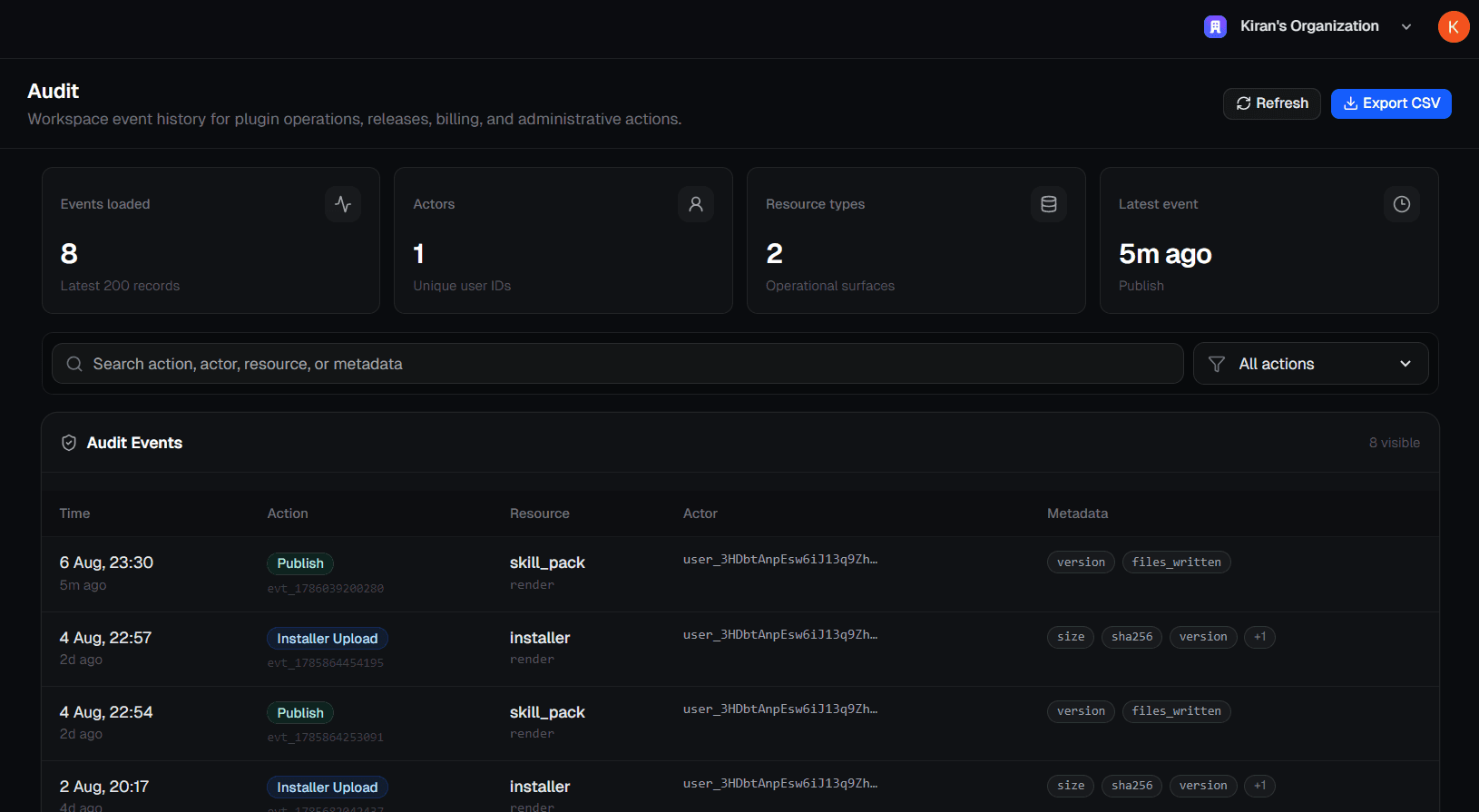
Publishing is role-gated, and every change records who did what, when, and from where.
We receive event signals, not your data
Telemetry is compact status codes — succeeded, recovered, failed. No screenshots, no page content, no personal data.
Pay for reach, not for runs.
Unlimited installs and unlimited executions on every tier — including the free one — because execution happens on your machines and costs us nothing. What you pay for is how far your skills are allowed to travel.
Free
Prove it works, on one machine
Free/ forever
- 1 seat
- 1 machine
- 1 Conxa Execute seat
- 25 compile credits/month
- 500K AI Usage Credits/month
- Internal distribution only
- No ops dashboard
- No analytics retention
Starter
Run it across your team
₹19,999/ monthly
- 3 seats
- 3 machines
- 25 Conxa Execute seats
- 200 compile credits/month
- 2M AI Usage Credits/month
- External distribution, Conxa-branded
- Basic dashboard
- 90-day analytics retention
Pro
Ship it to your own customers
₹49,999/ monthly
- 10 seats
- 10 machines
- 100 Conxa Execute seats
- 500 compile credits/month
- 10M AI Usage Credits/month
- External distribution, Conxa-branded
- Full dashboard, drift detection, audit export
- 365-day analytics retention
Enterprise
Ship it under your own brand
Custom/ contract
- Seats agreed per contract
- Machines agreed per contract
- Conxa Execute seats agreed per contract
- Unlimited compile credits/month
- Contracted AI Usage Credits reserve
- External distribution, white-label
- Full dashboard, drift detection, audit export
- Custom analytics retention
- Bring your own key (Azure OpenAI)
Before you ask.
The questions every enterprise team asks ahead of a demo.
Where do our logins and credentials live?
On your machine, encrypted in the operating system keychain. They are never sent to Conxa and never included in published skills.
Do you run our workflows in your cloud?
No. Execution is 100% local. Our cloud only hosts, versions, and coordinates skills — it has no way to run them.
What data does Conxa receive?
Compact event signals only: a step succeeded, recovered, or failed, and when. No screenshots, no page content, no personal data.
What happens when the software's screen changes?
Each step knows its target several ways — its text, its role, its position, how it looks. Most changes are handled on the spot at zero AI cost. Harder cases get an assisted fix, and drift shows up on your dashboard so nothing breaks silently.
Do we need engineers to create a skill?
No. Anyone who can do the workflow can record it. You demonstrate it once in a real browser — no scripting, no setup.
What software does it work with?
Anything that runs in a browser: Salesforce, SAP, cloud consoles, and the internal tools that never got an API.
Why not just build an API for the system we need to connect to?
For the one system you own, that's often the right call. It's not true for the other four systems in the process that you don't control, and it's not true for the long-tail workflow that's too small to ever get its own sprint. We can put a number on it: the hours this process costs you per month against what building and maintaining five integrations would take, versus recording it once.
What if the software we need to automate blocks bots or requires MFA?
We check before we promise. Aggressive bot protection targets datacenter traffic, not an employee's own machine on a corporate IP in a real browser — most line-of-business software has none of it. A fresh one-time code on every login is the one thing that genuinely can't be automated unattended, so we screen for MFA policy, bot protection, terms of service, and session lifetime before any workflow is qualified.
How is this different from Comet or Claude in Chrome?
Different category, not a better version of the same one. Those assistants rediscover the interface every run — per-session, non-deterministic, token cost each time — which is right for a person doing a one-off task. Conxa compiles a workflow once and replays it deterministically, with recovery, for a process that runs unattended a thousand times.
What platforms are supported?
Windows today. macOS is on the roadmap.
How does pricing work?
You pay to build and publish skills. Running them is free and unlimited — your cost doesn't grow with usage.
What if Conxa's cloud goes down?
Your skills keep running locally. Only new skill updates wait until the cloud is back.
Do you have SOC 2 or similar certifications?
Not yet — we're early. But our architecture keeps sensitive data on your machines, so most of it never reaches us in the first place.
See it on your own software.
Record your first workflow in minutes — or walk through it with us on the tools your team uses every day.